What Are the National Symbols of India?
The national symbols of India are objects, animals, or emblems that stand for the culture and history of the country. They represent the values of unity, strength, peace, and respect for tradition. These symbols are officially recognized and have a deep meaning for all Indians. For students, learning about our national symbols is an easy way to understand the nation’s identity.
Why Are National Symbols Important?
National symbols of India are not just signs; they are reminders of our shared pride. For example, the national flag shows unity, and the national anthem inspires patriotism. Each symbol teaches us about respect, discipline, and love for the country. This is why schools teach children about what are the 17 national symbols of India, so they know their importance in daily life.
The List of National Symbols of India
India has 17 officially recognized symbols. Each one is unique and represents a part of our national identity. Students often ask what are the 17 national symbols of India, and the answer is simple: they include animals, plants, songs, and emblems that describe India’s soul. Below is the full list of national symbols of India:
1. National Flag of India – Tiranga
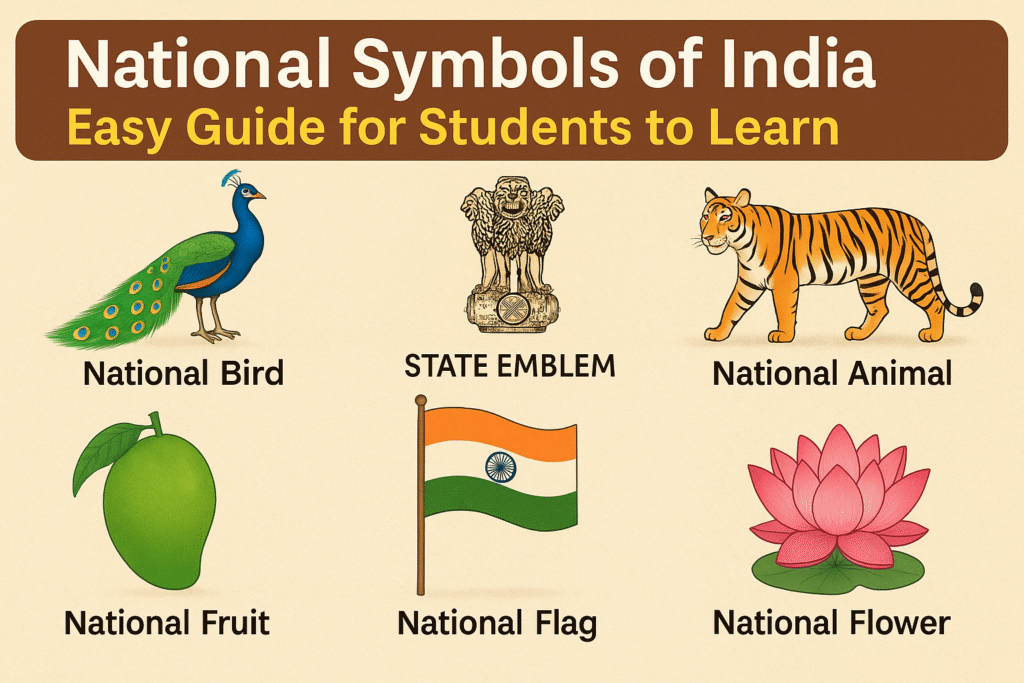
The Indian flag is known as the Tiranga because it has three colors. Saffron stands for courage, white for peace, and green for prosperity. The Ashoka Chakra in the center represents law and progress. Every student should know that the Indian flag is the most respected symbol of our freedom and unity.
2. National Emblem of India
The national emblem of India is taken from the Lion Capital of Ashoka at Sarnath. It has four lions standing back to back, showing power, courage, pride, and confidence. Below it is the phrase “Satyameva Jayate,” meaning “Truth Alone Triumphs.” The national emblem of India is used on currency, official letters, and government buildings.
3. National Anthem – Jana Gana Mana
The national anthem is “Jana Gana Mana,” written by Rabindranath Tagore. It shows unity and respect for the entire nation. Singing the anthem gives pride to every Indian. The national symbols of India with names include both songs and objects, making them easy for students to learn.
4. National Song – Vande Mataram
“Vande Mataram,” written by Bankim Chandra Chattopadhyay, is the national song of India. It inspires patriotism and devotion to the motherland. Schools often teach this song so children can understand its value as part of our national symbols.
5. National Animal – Royal Bengal Tiger
The Royal Bengal Tiger is the national animal of India. It stands for strength, courage, and power. It also reminds us of the importance of protecting wildlife. Among the national symbols of India for kids, the tiger is one of the easiest to remember.
6. National Bird – Indian Peacock
The peacock is the national bird of India. Its colorful feathers and graceful dance show beauty and joy. It also holds a special place in Indian traditions and mythology. The national symbols of India with names in English include the peacock as a sign of grace.
7. National Flower – Lotus
The lotus is the national flower of India. It grows in muddy water but remains pure and beautiful, symbolizing purity and faith. The lotus is also important in Indian culture and spirituality. Students can remember this easily when studying the national symbols of India for kids.
8. National Fruit – Mango
The mango, called the “king of fruits,” is the national fruit of India. It represents sweetness and richness in Indian culture. The mango is loved by children and adults alike, making it a favorite among national symbols of India with names.
9. National Tree – Banyan Tree
The banyan tree is the national tree of India. It represents longevity and strength because of its long life and deep roots. The tree is seen as a shelter and a place of wisdom in villages. This symbol is part of our national symbols to show stability.
10. National River – Ganga
The Ganga is the national river of India. It is sacred to millions and provides water to large parts of the country. It shows purity and life. Among the national symbols of India images, the river is a symbol of spirituality and survival.
11. National Currency Symbol – ₹
The Rupee symbol (₹) is the currency sign of India. It combines the Devanagari “Ra” with the Roman “R,” showing tradition and modernity. It is used on coins, notes, and all official money matters. Students can easily spot this among the national identity symbols of India.
12. National Calendar – Saka Calendar
The Saka calendar is the official calendar of India. It is used in government offices along with the Gregorian calendar. Knowing this symbol is part of learning Indian national symbols information.
13. National Game – Hockey
Hockey is the national game of India. It shows teamwork, energy, and sportsmanship. India has won many Olympic medals in hockey, making it an important part of national symbols of India with names in English.
14. National Heritage Animal – Elephant
The Indian Elephant is the national heritage animal of India. It represents wisdom, strength, and cultural importance. Protecting elephants is important for preserving our national symbols.
15. National Aquatic Animal – River Dolphin
The River Dolphin is the national aquatic animal of India. It shows the importance of river life and biodiversity. This rare animal is listed among national symbols of India for kids to raise awareness about conservation.
16. National Reptile – King Cobra
The King Cobra is the national reptile of India. It symbolizes power and mystery. This reptile is included in the list of national symbols of India to represent wildlife diversity.
17. National Vegetable – Pumpkin
The pumpkin is recognized as the national vegetable of India. It is used in many traditional dishes and is loved by families. This is an easy one for students when learning what are the 17 national symbols of India.
Importance of National Symbols for Students
Learning the national symbols of India helps students understand the meaning of unity and pride. They can answer simple questions like what are the 17 national symbols of India and also connect to Indian traditions. Teachers often use national symbols of India images in classrooms to make learning easier.
Conclusion
The national symbols of India reflect the heart of the nation. They remind every citizen of unity, pride, and cultural heritage. From the Indian flag to the national emblem of India, these 17 symbols create a bond between citizens and their country. Students who learn about national symbols of India with names in English will carry these values for life, keeping the spirit of the nation alive.